
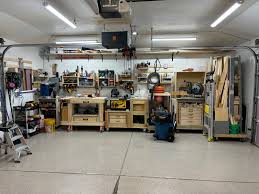
Every great manufacturing success story starts with a spark: an idea, a need, or simply a stubborn determination to make something better. Some of the world’s most iconic manufacturing brands began not with corporate funding or automated lines, but with grease-stained hands, borrowed tools, and a corner of a garage.
These stories aren’t just inspiring; they hold valuable lessons for modern manufacturers striving to scale sustainably, embrace innovation, and refine their operations.
Hewlett-Packard: The Birthplace of Silicon Valley
In 1939, Bill Hewlett and Dave Packard started Hewlett-Packard in a one-car garage in Palo Alto, Ca. Their first product? An audio oscillator used by Walt Disney to test sound equipment for Fantasia.
Operations Lesson: HP’s founders built their culture around experimentation and continuous improvement, what they called the “HP Way.” They focused on listening to customers, empowering employees, and improving processes from the ground up. That people-centered, data-driven approach laid the groundwork for what we now know as Lean and Agile manufacturing.
Harley-Davidson: Metal, Passion, and Perseverance
In 1903, William Harley and Arthur Davidson built their first motorcycle in a small shed in Milwaukee. Their earliest machines couldn’t even climb hills without help, but they kept iterating, welding, and redesigning.
Operations Lesson: Harley-Davidson’s founders embodied kaizen before the term existed. Their relentless pursuit of performance improvements and, later, their operational turnaround in the 1980s using Just-in-Time and Total Quality Management reminds us that operational excellence is a journey, not a destination.
Dyson: Engineering Disruption Through Design
James Dyson built 5,127 prototypes before perfecting his first bagless vacuum. He did it alone, without investors, in a small outbuilding behind his home.
Operations Lesson: Dyson’s persistence mirrors the spirit of root-cause problem solving in Lean. Instead of accepting inefficiency, he analyzed every failure, made incremental adjustments, and validated each change with data and testing. Manufacturers today can take a page from his playbook: test small, learn fast, and never settle for “good enough.”
Toyota: From Looms to Lean
Before becoming a global automotive leader, Toyota was a small loom manufacturer. Sakichi Toyoda’s automatic loom improved textile production efficiency, and his principle of jidoka (automation with a human touch) became one of the cornerstones of the Toyota Production System.
Operations Lesson: Toyota didn’t just make cars better; they changed how the world makes everything. By empowering frontline employees to stop production and fix problems in real time, Toyota demonstrated that operational excellence starts with trust, training, and respect for people.
Operational Grit Builds Global Greatness
Behind every global manufacturing brand is a story of iteration, learning, and relentless problem-solving. Whether you’re a job shop in the Midwest or a precision components maker in Vancouver, the same operational truths apply:
- Start small, but start with quality.
- Empower your people to improve processes.
- Use data to drive decisions, not opinions.
- Fail fast, learn faster, and iterate relentlessly.
You don’t need a massive facility or a huge budget to build something world-class. You just need the discipline to improve, every single day.
Reflection for Manufacturers
If your team is ready to move from busy to better, ask:
- Where are the bottlenecks we’ve accepted as normal?
- How can we empower operators to drive improvement?
- What small experiments could lead to big breakthroughs?
Remember, every great manufacturing movement started somewhere humble. Maybe your “garage” moment is happening right now.