
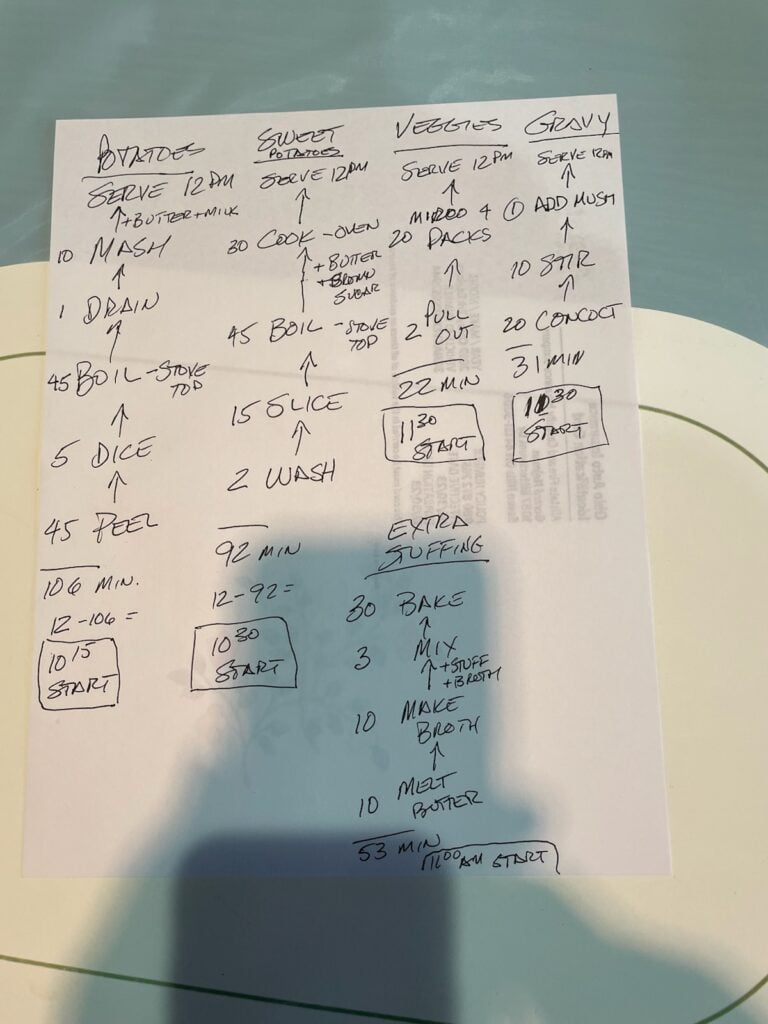
Thanksgiving dinner is a lot like running a factory. You have multiple products (turkey, sides, desserts), limited resources (burners, oven space, countertop room), and a strict delivery deadline (dinner at 4 p.m. sharp). If you’ve ever watched an industrial engineer cook, you’ll see the same principles we use on the shop floor applied to stuffing and sweet potatoes.
The first step? Identify your constraints. In most kitchens, the burners on the stovetop are your bottleneck. You can’t run pots of mashed potatoes, gravy, and green beans all at once without chaos. An industrial engineer will map out a schedule: what goes on each burner, in what order, and for how long just like sequencing operations on a production line.
Next comes work balancing. Some dishes take longer than others, so the engineer calculates start times to ensure everything reaches “done” simultaneously. The turkey might be the long lead item, while cranberry sauce is a quick operation that can run closer to serving time. If one dish finishes early, there’s a buffer; if it finishes late, contingency plans are ready. Think of it as a Gantt chart for your kitchen.
Standard work instructions are critical. Recipes are reviewed like SOPs: quantities, temperatures, and timing must be precise. Any deviation risks scrap: burnt rolls, dry turkey, or lumpy gravy. And like in manufacturing, quality checks are built into the process: tasting along the way, adjusting seasoning, and confirming the doneness of every dish.
Finally, don’t forget continuous improvement. After dinner, the engineer analyzes the process: Which pots crowded the stove? Which tasks could be prepped earlier? What could be automated next year? Maybe premade sides or a second oven? This post-mortem ensures the next Thanksgiving runs even smoother.
In the end, Thanksgiving is about more than efficiency, but planning like an industrial engineer ensures that all the hard work hits the table on time, every dish is at its peak, and the family gets to enjoy the feast, not the stress.
Whether you’re running a manufacturing line or the holiday dinner line, success is all in the planning, scheduling, and execution.