
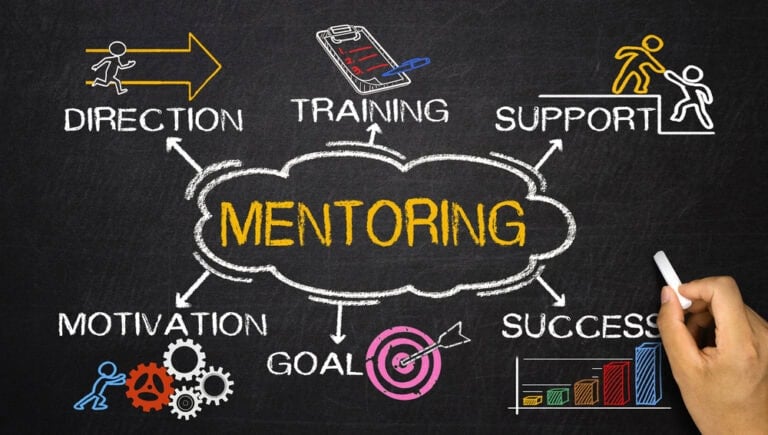
Entering manufacturing as a new hire can feel overwhelming. From learning machinist‑level techniques, safety procedures, equipment maintenance, quality control, to understanding workplace culture and career growth, there’s a lot to absorb. That’s where mentorship becomes a game‑changer.
What Mentorship Brings to New Manufacturing Workers
Mentors accelerate learning by sharing technical know‑how, best practices, and the “tribal knowledge” that never makes it into textbooks or training manuals. They help new hires avoid common mistakes, understand quality standards, and maintain safety protocols to reduce rework, scrap, and workplace incidents. Guidance from experienced professionals also shows new employees how to grow beyond entry‑level roles by fostering upward mobility. Mentorship builds confidence, job satisfaction, and retention, while strengthening teamwork and creating a culture of continuous learning, which is critical in safety‑ and precision‑driven manufacturing environments.
Without mentoring, many promising hires, especially those new to the trade, may drift, underperform, or leave for other opportunities because they don’t feel supported or don’t see a path forward.
Where Are Manufacturing Mentors
Mentors aren’t unicorns; there are many places they can be found. Sometimes, you just need to know where to look.
1. Within Your Own Company: Senior Craftspeople & Journeypersons
Many experienced workers are sitting right beside you on the shop floor — machinists, technicians, foremen, engineers — who’ve “been there, done that.” Organizations that formalize mentorship or even allow informal mentor‑mentee pairings see big payoffs. If your employer doesn’t have a formal mentorship program, consider asking whether there’s someone willing to show you the ropes or mentor informally.
2. Industry‑Wide Mentorship Programs, Non‑profits & Women‑Focused Organizations
There are national, regional and state-level organizations whose mission is to provide mentorship, support, and career pathways, especially for newcomers and under‑represented groups. Here are some of the most useful:
- The Manufacturing Institute’s “Women MAKE” / mentorship‑oriented initiatives are intended to connect seasoned professionals with newer entrants to manufacturing.
- Women in Manufacturing (WiM) is a national trade association offering year‑round support, virtual learning, networking, job board access, local chapters, and formal professional‑development and mentoring structures.
- HHW Ohio was originally founded to support tradeswomen; it now helps women and girls pursue careers in high‑demand, high‑wage technical and skilled trades (including manufacturing, metalworking, construction, etc.) by offering training, career preparation, mentorship, outreach and placement support.
- There are many regional workforce‑development or trade‑school‑based apprenticeship/training providers, especially those oriented to non‑traditional entrants or offering pre‑apprenticeship training, technical education, and hands‑on mentoring/transition support.
3. Networks, Professional Associations, and Peer/Cross‑company Mentor Matching
Professional associations, peer‑networks, cohorts and cross‑company mentorship platforms can also help. They offer opportunities to connect with people beyond just your employer or local area, which can be especially valuable for gaining broader industry insight, career advice, or finding mentors if your own shop is small or doesn’t have a formal mentoring culture.
4. Consulting, Coaching & External Mentorship Providers
Companies like Manufacturing Resource Network (MRN) can play a role as connectors to bring in experienced professionals, offer career coaching and strategic guidance, and help new workers (or career‑changers) link up with appropriate mentors inside or outside their company.
Make sure to be proactive and coachable. Treat mentorship as a relationship and a growth opportunity. Ask smart questions, seek feedback, show willingness to learn. That’s often what attracts committed mentors.
Why It Matters For You and for All of Manufacturing
Manufacturing in America is facing a wave of retirements, evolving technology, and a growing skills gap. Mentorship isn’t a “nice to have;” it’s a strategic imperative. When experienced workers pass knowledge to the next generation, companies maintain quality, safety, and efficiency. New talent finds purpose, growth, and reason to stay. The whole industry stays competitive, resilient, and future‑ready.
At Manufacturing Resource Network, we believe strongly in this and want to help new workers connect with the mentors waiting out there.
What This Means for New Workers
Manufacturing Resource Network is uniquely positioned to be a bridge: connecting people who are new to trade/manufacturing careers with seasoned professionals, trade‑industry organizations, training resources, and mentorship avenues across the country or region. By promoting and collaborating with companies and organizations we can help broaden access, especially for under‑represented populations, career‑changers, or those seeking support outside traditional hiring pipelines.
For a newcomer, whether just out of school, switching careers, or returning to manufacturing after a break, this document provides a roadmap: where to look, who to contact, and what to expect. That clarity can make all the difference between feeling lost and finding a path forward.